The Role of the Compliance Officer in a DCAA-Regulated Firm
The single most expensive position a government contractor can leave unfilled isn’t a billable engineer. It’s a compliance officer.
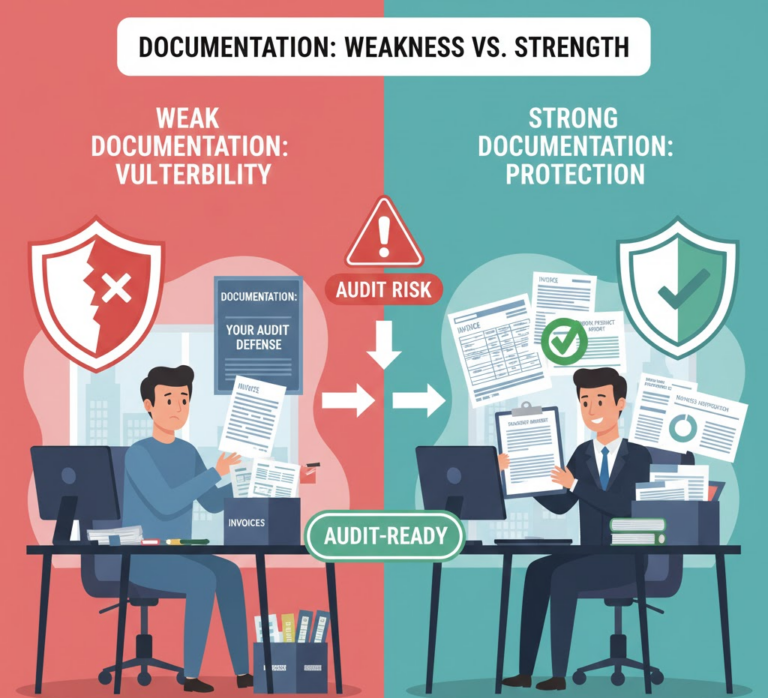
I’ve audited firms where the CFO was also the contracts manager, the timekeeping administrator, and the de facto compliance function — all at once. That arrangement works fine until DCAA shows up. Then it falls apart quickly, because wearing every hat means no one is watching the system as a whole. By the time the audit finding lands, the contractor is scrambling to explain gaps that a dedicated compliance function would have caught in the first week.
For small government contractors especially, the compliance officer role is often treated as something to formalize later — after the next contract award, after the team grows, after things settle down. Here’s the problem: DCAA doesn’t grade on a curve for small businesses. The regulatory obligations are the same regardless of your headcount, and the compliance officer is the person responsible for making sure your firm meets them.
Let me show you exactly what that role looks like, why it matters, and how to build it right before it costs you.
The Legal Framework That Defines the Role
The compliance officer’s job exists because federal regulations require contractors to maintain systems, policies, and controls that can withstand government scrutiny at any time — not just during scheduled audits.
FAR 52.215-2, the Audit and Records — Negotiation clause, gives DCAA the right to examine and audit all contractor records related to the negotiation, pricing, and performance of government contracts. The compliance officer is the internal counterpart to that right — the person ensuring those records exist, are accurate, and are organized for examination.
FAR 31.201-2 establishes the four tests a cost must pass to be allowable: it must be reasonable, allocable, compliant with CAS where applicable, and consistent with the terms of the contract. The compliance officer is the internal gatekeeper who ensures that costs hitting government contracts can survive all four tests.
For contractors subject to Cost Accounting Standards, CAS 401 requires that the contractor’s cost accounting practices be consistently applied — and that any changes be disclosed and approved in advance. Managing that disclosure process, and ensuring practices don’t drift from what’s been disclosed, falls squarely in the compliance officer’s lane.
The DCAA Contract Audit Manual, Chapter 4 outlines exactly what auditors examine when evaluating a contractor’s accounting and billing systems. A skilled compliance officer has read it. A firm without one probably hasn’t.
What the Compliance Officer Actually Does
This is where contractors miss the mark most often: they treat the compliance officer as a policy writer or an audit coordinator — someone who produces binders and answers DCAA’s questions. That’s a fraction of the role.
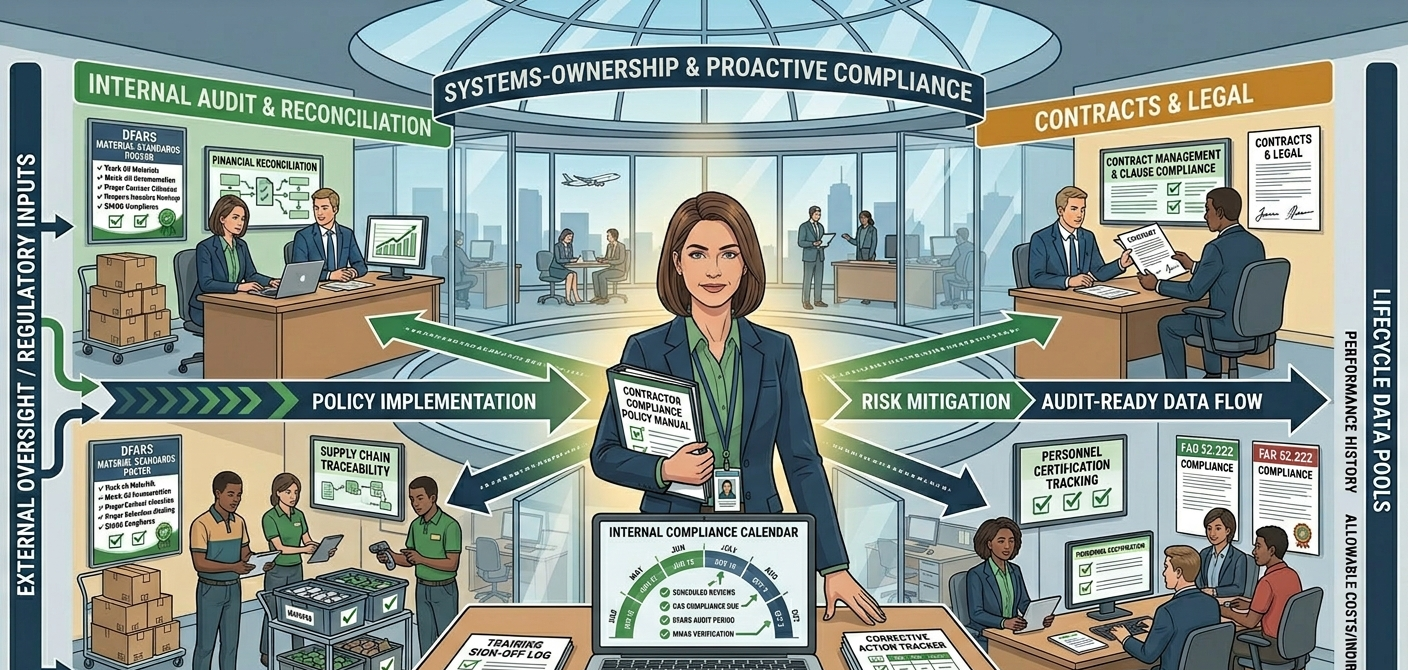
The compliance officer in a DCAA-regulated firm is responsible for four core functions:
System ownership. The compliance officer owns the written policies and procedures that govern how your firm accumulates, allocates, and bills costs. That includes your timekeeping system, your labor distribution process, your subcontract management procedures, and your billing controls. If any of those systems drift from your written policies, the compliance officer catches it before an auditor does.
Training and culture. FAR 31.201-2 requires that costs be reasonable and consistent with established practices. That consistency doesn’t happen on its own — it requires ongoing employee training. The compliance officer ensures that every person who touches a timesheet, approves a purchase order, or codes an expense understands what the rules are and why they matter. Effective DCAA timekeeping training isn’t a one-time event; it’s a recurring responsibility.
Internal monitoring. The compliance officer conducts or oversees periodic internal reviews — floor checks, timesheet audits, billing reviews — and documents the results. This isn’t about catching people doing things wrong. It’s about identifying systemic gaps before they become audit findings. A compliance officer who reviews labor charging quarterly is worth ten times more than one who only reviews it when DCAA calls.
Audit liaison. When DCAA does engage — whether for a pre-award survey, an incurred cost audit, or a business system review — the compliance officer is the primary point of contact. They coordinate document production, respond to requests for information, and ensure the contractor’s position is clearly communicated. This function alone justifies the role. Contractors without a designated compliance officer often provide inconsistent answers to auditors, which creates the appearance of disorganization even when the underlying records are sound.
Five Steps to Build a Functional Compliance Program
Step 1: Define the role in writing and assign it to a named individual. A compliance function without an owner is not a function — it’s an intention. Document who is responsible for compliance oversight, what their authorities are, and how they interact with finance, contracts, and operations.
Step 2: Conduct a baseline compliance assessment. Before you can manage compliance, you need to know where you stand. Map your current practices against your disclosed accounting practices and the applicable FAR and DFARS requirements. Document gaps and prioritize remediation. If you need a framework, the DCAA Pre-Award Survey checklist is a good starting point.
Step 3: Build a compliance calendar. Compliance isn’t annual — it’s continuous. Schedule quarterly timesheet floor checks, semi-annual billing system reviews, and annual policy updates. Put them on the calendar with assigned owners and deliverables. A compliance calendar transforms a reactive function into a proactive one.
Step 4: Establish a written training program. Document what training is required, who receives it, how often, and how completion is recorded. At minimum, every employee who charges time to government contracts should receive timekeeping training at hire and annually thereafter. For your DCAA-compliant timekeeping system to hold up under audit, the people using it need to understand the rules.
Step 5: Create a corrective action process. When internal monitoring identifies a gap, there must be a documented process for resolving it — root cause identification, corrective action, re-testing, and sign-off. This process demonstrates to DCAA that your compliance function is working as designed, not just documenting problems without fixing them.
The Cost of Getting This Wrong
A business system deficiency finding under DFARS 252.242-7001 can trigger payment withholding of up to 5% of contract billings until the deficiency is corrected. On a $3 million cost-reimbursement contract, that’s $150,000 in withheld cash — plus the cost of a corrective action plan, consultant fees, and re-audit.
A part-time compliance officer costs a small contractor somewhere between $30,000 and $60,000 annually depending on experience and structure. A full-time, dedicated compliance professional at a mid-size firm runs $80,000–$120,000.
The math isn’t complicated. A single significant deficiency finding costs more than two years of compliance staffing — and that’s before you account for the distraction, the reputational risk, and the possibility of contract termination.
Jurisdictional Scope
The FAR-based compliance obligations described here apply to all federal contractors performing cost-reimbursement, time-and-material, or labor-hour contracts across both DoD and civilian agencies. DFARS-specific requirements — including the business system rules under DFARS 252.242-7001 — apply to DoD contractors only. Small contractors performing firm-fixed-price work exclusively have reduced exposure, but FAR 52.215-2 audit rights can still apply if the contract was negotiated on the basis of cost or pricing data.
The compliance officer isn’t overhead. In a DCAA-regulated environment, that function is the infrastructure that keeps everything else standing. Build it intentionally, staff it properly, and give it the authority to do its job — and you’ll find that audits become manageable reviews instead of existential events.
Hour Timesheet supports government contractors with DCAA-compliant timekeeping tools designed to make the compliance officer’s job easier. Learn more about our platform here.