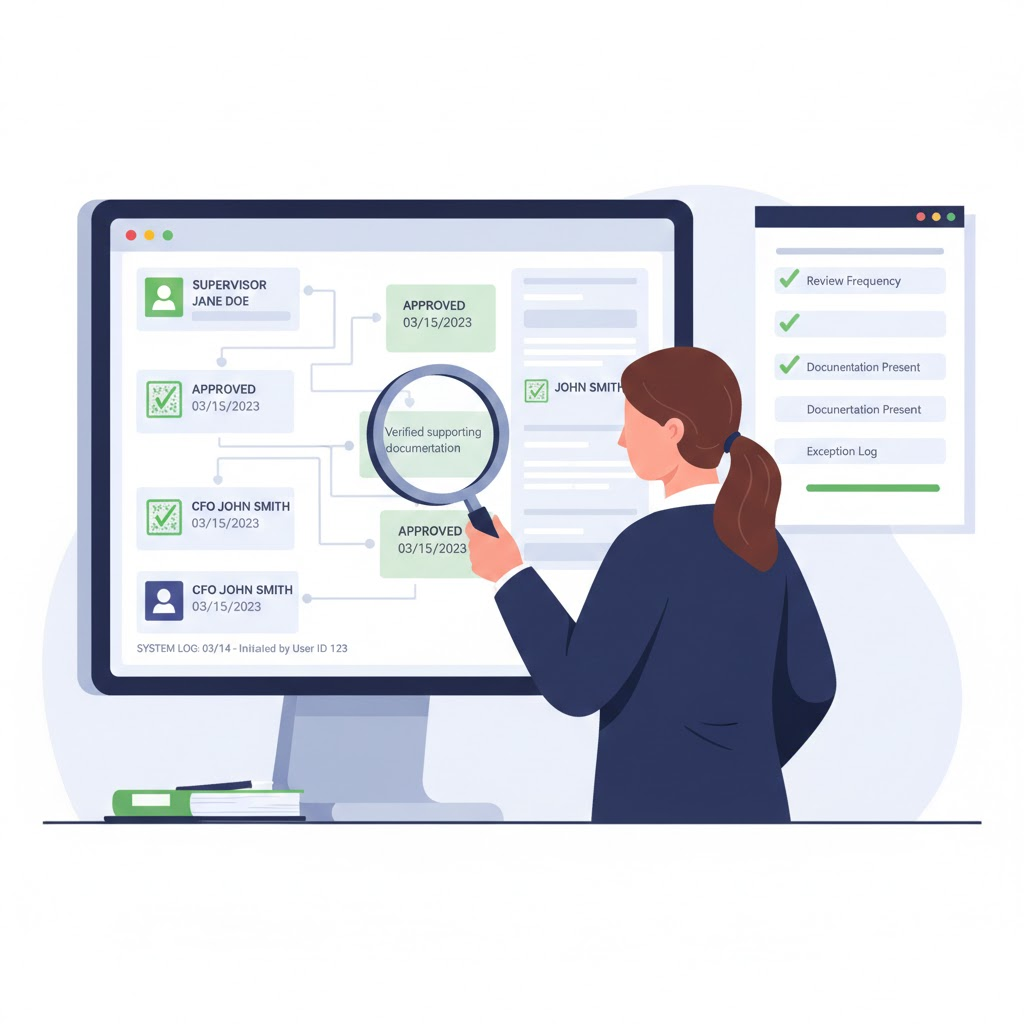
DCAA auditors arrived unannounced at your facility at 9:30 AM requesting floor checks—direct observation and interviews with employees at their workstations. Your engineering staff confidently described their work but couldn’t explain their timesheet charge codes, your technicians said they “usually charge to whatever project seems right,” and your administrative staff admitted supervisors approve timesheets “automatically without really looking at them.” Two weeks later, DCAA issued findings questioning $420,000 in labor costs, citing systematic labor mischarging evidenced by employee statements demonstrating lack of understanding about proper time recording, inadequate supervisor review, and disconnection between actual work performed and timesheet charges. Here’s what contractors miss about floor checks: DCAA doesn’t just examine accounting records and system documentation—auditors interview employees directly to verify that timekeeping practices described in policies actually occur in daily operations, that workers understand charging requirements, and that supervisors perform meaningful review rather than perfunctory approval. Understanding how to prepare employees for floor check interviews isn’t about scripting responses or coaching evasion—it’s about ensuring your workforce genuinely understands timekeeping requirements, consistently follows proper procedures, and can articulate practices accurately because they actually perform compliant time recording every day.
The Legal Framework Governing DCAA Floor Checks and Interviews
Federal audit regulations grant DCAA comprehensive access to contractor facilities, records, and personnel as part of contract cost verification responsibilities. FAR 52.215-2, Audit and Records—Negotiation, requires contractors to provide access to records and personnel supporting contract costs, with “personnel” explicitly including employee interviews enabling auditors to verify accounting system operation and cost accuracy through direct observation and questioning. This isn’t optional courtesy—it’s contractual obligation with floor check refusal constituting audit obstruction triggering serious compliance consequences.
The timekeeping adequacy standards under DFARS 252.242-7006 require accounting systems to provide accurate labor distribution supporting direct and indirect cost accumulation. DCAA verifies timekeeping adequacy not only through system documentation review but through floor checks observing actual timekeeping practices, interviewing employees about how they record time, questioning supervisors about approval procedures, and comparing employee descriptions to documented policies. When floor check observations contradict system documentation, DCAA concludes that accounting system deficiencies exist regardless of written procedure adequacy, because systems failing operational testing don’t meet regulatory standards. Understanding DCAA compliance requirements means recognizing that floor checks represent critical verification mechanism distinguishing theoretical compliance from operational reality.
FAR 31.201-2(d) mandates adequate accounting systems and internal controls ensuring cost accuracy, with adequacy assessed through both design evaluation and operational testing. Floor checks constitute operational testing par excellence—auditors observe whether employees actually record time daily, whether supervisors actually review timesheets meaningfully, whether charge codes actually match work performed, and whether practices actually align with documented procedures. System adequacy requires both proper design and effective operation, with floor checks specifically evaluating the operational dimension that document review cannot assess.
The critical consideration involves DCAA Contract Audit Manual 5-104, establishing floor check procedures including: observing employees at work locations, verifying activities match timesheet charges, interviewing employees about timekeeping practices, questioning supervisors about review procedures, and comparing observations to accounting system documentation. These procedures aren’t punitive gotcha tactics—they’re systematic verification methods ensuring labor costs billed to government reflect actual work performed rather than approximations, estimates, or convenient allocations disconnected from reality.
What Contractors Must Understand About Floor Check Challenges
Here’s what contractors miss about floor checks: employees articulate what they actually do, not what policies say they should do. DCAA compliance explained emphasizes that well-meaning employees honestly describing actual practices reveal compliance gaps when reality diverges from documented procedures. Your engineer explaining “I usually fill out my timesheet Friday afternoon based on what I remember from the week” has just told DCAA that daily time recording requirements aren’t followed. Your supervisor stating “I approve everyone’s timesheets Monday morning, takes about five minutes for the whole team” has revealed that meaningful review doesn’t occur. These honest descriptions of non-compliant practices create the audit findings that theoretical policy compliance cannot overcome.
The charge code understanding gap emerges when employees cannot explain what their timesheet codes represent, which contracts codes correspond to, or why they selected specific codes. This is where audits go sideways—employees perform legitimate work and accurately record hours but charge time based on convenience, supervisor direction, or arbitrary allocation rather than actual contract work performed. When DCAA asks “why did you charge to this code?” and receives responses like “that’s what my supervisor told me to use,” “I’m not sure, it was already selected in my timesheet,” or “I just pick whichever contract seems related,” auditors conclude that labor distribution doesn’t reflect actual work and therefore costs charged to government lack reliability supporting reimbursement.
The work description mismatch surfaces when employee descriptions of daily activities don’t align with projects charged on timesheets. Your software developer describing work on “the new user interface module” while timesheets show charging to “systems integration contract” reveals potential mischarging when contracts involve different scope. Your technician explaining work on “customer prototype assembly” while charging to “overhead” indicates improper direct/indirect classification. These disconnections between work performed and time charged demonstrate the labor mischarging that floor checks specifically target for identification.
The supervisor approval disconnect appears when supervisors cannot describe their approval process, explain what they review, or identify instances where they questioned timesheet accuracy. DCAA timekeeping requirements mandate meaningful supervisor review as essential control over labor accuracy, not rubber-stamp approval. When supervisors admit they “just approve everyone because they trust their employees,” “don’t really have time to review in detail,” or “approve in bulk without looking at individual charges,” they’ve described control failure allowing systematic mischarging regardless of whether individual employees intend proper charging.
The contemporaneous recording failure manifests when employees describe completing timesheets weekly, bi-weekly, or from memory rather than recording actual daily activity. Daily time recording isn’t bureaucratic preference—it’s regulatory requirement ensuring accuracy that memory-based reconstruction cannot provide. When employees explain “I keep a notepad and enter everything Friday,” “I usually remember what I did and fill it in later,” or “I know roughly how I spend my time so I allocate accordingly,” they’ve admitted violating daily recording requirements that create the basis for questioned labor costs.
The documentation understanding gap emerges when employees cannot explain what support they maintain for time charged, whether they retain task orders or work assignments, or how they demonstrate time was charged correctly. While employees aren’t expected to maintain audit files, understanding that work assignments, emails directing tasks, project documentation, and other records support timesheet accuracy demonstrates awareness that time charging requires substantiation beyond personal assertion.
The training deficiency becomes apparent when employees reveal they’ve never received timekeeping training, don’t understand why accurate charging matters, or weren’t informed about compliance requirements. Untrained employees cannot comply with requirements they don’t understand, with training gaps creating systematic non-compliance across your workforce that floor checks expose through employee interviews revealing fundamental misunderstanding about basic timekeeping obligations.
Five Essential Steps for Floor Check Preparation and Employee Readiness
Step 1: Implement Comprehensive Timekeeping Training for All Employees
Develop structured timekeeping training program covering: daily recording requirements explaining why time must be recorded each day, charge code selection guidance describing how to identify proper codes, direct versus indirect cost distinction clarifying what work charges to contracts versus overhead, timesheet accuracy importance explaining government reimbursement reliance on accurate labor distribution, and correction procedures establishing how to fix errors. Deliver training to all employees including new hire orientation, annual refresher sessions, and targeted training when compliance issues emerge.
Create practical training materials using real-world scenarios relevant to your business including example situations showing proper charge code selection, common charging mistakes to avoid, and decision trees helping employees classify ambiguous activities. Avoid abstract policy recitation in favor of concrete examples employees can apply to actual work situations. Include supervisor-specific training addressing approval responsibilities, review procedures, and questioning techniques identifying potential charging errors before approval.
Implement training documentation requiring employee acknowledgment confirming they received training, understand requirements, and agree to follow procedures. Maintain training records demonstrating compliance commitment while supporting audit defense when DCAA questions whether employees were adequately instructed about timekeeping obligations. Periodic refresher training addresses compliance drift and reinforces requirements that daily routine may obscure.
Step 2: Deploy Clear Charge Code Structure with Employee-Accessible Guidance
Establish logical charge code structure that employees can understand and navigate including clear code naming conventions, organized hierarchies grouping related codes, and intuitive selection processes minimizing confusion. Avoid cryptic code numbers without meaningful description—”Contract-ABC-Labor” communicates purpose better than “1234567” requiring reference lookup. Provide employees readily accessible charge code reference materials including code listings with descriptions, project scope summaries helping employees identify appropriate codes, and contact information for charging questions.
Implement automated charge code validation preventing common mistakes including controls blocking invalid codes, warnings flagging unusual charges requiring confirmation, and default code logic suggesting appropriate selections based on employee role and project assignments. Technology supporting proper charging reduces errors while demonstrating organizational commitment to accuracy that DCAA recognizes during floor checks when employees describe user-friendly systems supporting compliance rather than fighting confusing structures.
Create charging guidance addressing common scenarios including: how to charge time spanning multiple projects, how to classify meetings and administrative time, how to handle training and professional development, when travel charges directly to contracts versus indirect costs, and how to address rework or correction of prior deliverables. Scenario-based guidance provides answers to questions employees actually encounter, preventing improper charging guesses when employees lack clear direction.
Step 3: Establish Meaningful Supervisor Review and Approval Procedures
Develop detailed supervisor approval procedures requiring specific review activities including: validating hours align with employee schedules and known availability, confirming charge codes match assigned project work, questioning unusual patterns or unexpected charges, reviewing for proper direct versus indirect classification, and documenting approval with dated electronic signature or written certification. Train supervisors that approval represents management certification of accuracy, not administrative formality, with supervisors accountable for labor charging accuracy on approved timesheets.
Implement approval quality monitoring assessing supervisor compliance with review procedures through: periodic sampling of approved timesheets evaluating approval thoroughness, management interviews with supervisors about their review process, and exception reporting identifying supervisors with concerning approval patterns like identical timesheet distributions suggesting insufficient scrutiny. Address identified approval deficiencies through targeted retraining, management counseling, or procedural corrections preventing systematic review failures that floor checks would expose.
Create supervisor approval tools supporting effective review including reports showing employee historical charging patterns enabling identification of unusual changes, project status summaries providing context for evaluating time distribution reasonableness, and automated alerts flagging potential issues requiring closer examination. These tools demonstrate organizational investment in approval effectiveness while enabling supervisors to perform meaningful review efficiently rather than treating thoroughness and efficiency as competing objectives.
Step 4: Conduct Regular Internal Floor Check Simulations
Perform periodic internal floor checks mimicking DCAA procedures including: randomly selecting employees for interviews, observing work activities and comparing to timesheet charges, asking employees about charging practices and code selection, questioning supervisors about approval procedures, and comparing employee responses to documented policies. Conduct simulations without advance warning preventing artificial compliance during mock exercises that doesn’t reflect normal operations.
Document simulation findings identifying compliance gaps, employee misunderstandings, procedural deviations, or training deficiencies requiring correction. Treat simulation findings as opportunities for improvement rather than employee punishment, creating learning environment where mistakes discovered internally enable correction before DCAA identifies problems. Implement corrective actions addressing simulation findings including targeted retraining, procedure clarifications, system improvements, or control enhancements.
Brief employees on floor check purpose and expectations without scripting responses or coaching evasion. Explain that DCAA conducts floor checks verifying timekeeping procedures operate as documented, that employees should answer questions honestly about actual practices, and that candid responses help identify improvements supporting both compliance and operational effectiveness. Emphasize that floor checks aren’t investigations targeting employee punishment but verification procedures ensuring cost accuracy benefiting everyone through efficient audit processes and maintained contract relationships.
Step 5: Create Comprehensive Documentation Supporting Timekeeping Practices
Maintain detailed documentation demonstrating compliant timekeeping operations including: written policies describing recording requirements, approval procedures, charge code guidance, and correction protocols; training records documenting employee instruction and acknowledgment; timesheet records with approval evidence and dates; supervisor review documentation showing comments and concerns raised; and monitoring reports demonstrating systematic oversight. Organized documentation enables efficient floor check support while demonstrating organizational discipline that DCAA recognizes as compliance indicator.
Develop work assignment documentation practices ensuring employees maintain records supporting time charged including: task assignments from supervisors documenting directed work, project correspondence describing activities performed, deliverable records connecting work to contracts, and meeting documentation showing time spent in project activities. While employees shouldn’t maintain formal audit files, basic work records support accurate charging and enable verification that time distribution reflects actual activities.
Implement continuous documentation improvement addressing gaps or deficiencies identified through internal reviews, simulation findings, or operational challenges. Treat documentation as living compliance infrastructure requiring regular updates ensuring accuracy and relevance rather than static artifacts created once and never modified. Current, accurate documentation supporting actual practices provides foundation for successful floor checks demonstrating genuine compliance rather than theoretical policy creation.
The Investment in Floor Check Preparation
Implementing comprehensive floor check preparation program costs between $8,000 and $30,000 for small to mid-sized contractors depending on workforce size and training infrastructure requirements. This includes training development and delivery, procedure documentation, simulation conduct, and system improvements. Annual maintenance costs typically run $3,000 to $10,000 for ongoing training, periodic simulations, and documentation updates.
Let me show you the value: contractors with well-prepared employees pass floor checks demonstrating operational compliance supporting efficient audits with minimal findings. They avoid the substantial questioned costs that result when floor checks reveal systematic labor mischarging, inadequate supervision, or policy-practice disconnections. They maintain positive DCAA relationships through demonstrated compliance commitment that auditors recognize when employees accurately describe compliant practices.
Contractors with unprepared employees face massive questioned labor costs when floor check interviews reveal systematic non-compliance, experience accounting system disapproval when floor checks demonstrate control failures, and suffer audit inefficiency through extended verification procedures when initial observations raise reliability concerns. They incur crisis training costs implementing rushed preparation after floor check findings, though retrospective training cannot fix historical compliance failures that floor checks already documented.
Understanding Floor Check Scope Across Audit Types
DCAA conducts floor checks during various audit types including: accounting system audits verifying timekeeping adequacy, incurred cost audits testing labor distribution accuracy, forward pricing audits evaluating estimating system reliability, and defective pricing audits investigating cost or pricing data accuracy. Your floor check preparation must support all audit contexts, with employee readiness representing foundational compliance capability applicable across DCAA’s audit portfolio rather than isolated requirement for specific audit types.
Floor check frequency and intensity vary based on contractor compliance history, audit risk assessment, and specific audit objectives. Contractors with strong compliance records may experience brief, targeted floor checks, while those with deficiency histories face extensive verification including large employee samples, detailed questioning, and comprehensive observation. Building genuine compliance rather than superficial preparation remains the only reliable strategy across varying floor check scenarios.
Your Path to Floor Check Success
The floor check landscape rewards contractors who invest in genuine workforce compliance through comprehensive training, meaningful procedures, and systematic monitoring rather than superficial preparation hoping employees improvise acceptable responses. DCAA evaluates employee responses against documented procedures and regulatory requirements, with credibility depending on consistency between employee descriptions and actual practices.
For contractors seeking floor check preparation support, Hour Timesheet provides intuitive platforms employees understand and supervisors can effectively review, creating the user-friendly infrastructure supporting compliant operations that floor checks verify. Our systems generate approval documentation and audit trails demonstrating control operation when DCAA conducts verification procedures.
Your workforce represents your compliance front line during floor checks. Invest in training, procedures, and systems ensuring employees genuinely understand and consistently follow timekeeping requirements that floor check interviews will test.
Additional Resources
Related Hour Timesheet Articles:
- DCAA Compliance Requirements for Contractors
- DCAA Compliance Explained
- DCAA Timekeeping Requirements
Official Regulatory References:
- FAR 52.215-2 – Audit and Records—Negotiation
- DFARS 252.242-7006 – Accounting System Administration
- FAR 31.201-2 – Determining Allowability
- DCAA Contract Audit Manual
- Defense Contract Audit Agency